Ownership & Stewardship
Alternative Assets: When Assets Move Beyond the Market, Into Time
It is not the asset itself that is changing, but the temporal structure that once anchored its value.
There are assets that refuse to follow the cadence of price, declining to reflect themselves continuously on the digital tickers of the market. They possess no single price at any given moment, and they do not operate under the immediate logic of supply and demand. The distinction lies in the temporal structure within which they function: some assets react at the velocity of the market, while others accumulate value through latency.

The temporal structure that anchors its value has shifted.
There are assets that refuse to follow the cadence of price, accumulating value through latency.
They are grouped under the umbrella of “alternative assets” — a category defined in finance through exclusion: anything that is not cash, public equities, or bonds is typically placed under this label.
This is not a universal classification of alternative assets, but a way of reading how certain assets operate across different temporal systems.
In global wealth management surveys (Capgemini World Wealth Report 2026, as analyzed by CNBC), allocation to alternative assets within HNWI portfolios consistently remains in the double-digit range, reflecting a structural allocation rather than a cyclical preference. Yet the core truth does not lie in the numbers. It resides in the underlying logic: this is not an asset class operating at market velocity, but one that functions across fundamentally different temporal systems. Most misalignments do not stem from the choice of asset, but from placing the right asset into the wrong temporal system.
The Asset as an Ecosystem to Be Maintained
At deeper layers, what is optimized is no longer profit, but the capacity to preserve structure over time. In modern investment thought, The Most Important Things Illuminated frames assets through cycles, where time is expressed through volatility and risk. Yet beyond this market layer, assets begin to operate within alternative temporal systems–longer, slower, and less reactive to short-term fluctuations. The divergence is dictated entirely by the temporal system into which an asset is embedded.
When the timeline of an asset expands beyond market cycles, the question shifts from gain or loss within a cycle to preservation or fracture across time. At this depth, stewardship ceases to be a euphemism for risk management and becomes the operational logic of the system itself. Wealth is no longer accumulation, but a structure that must be sustained as a living ecosystem.
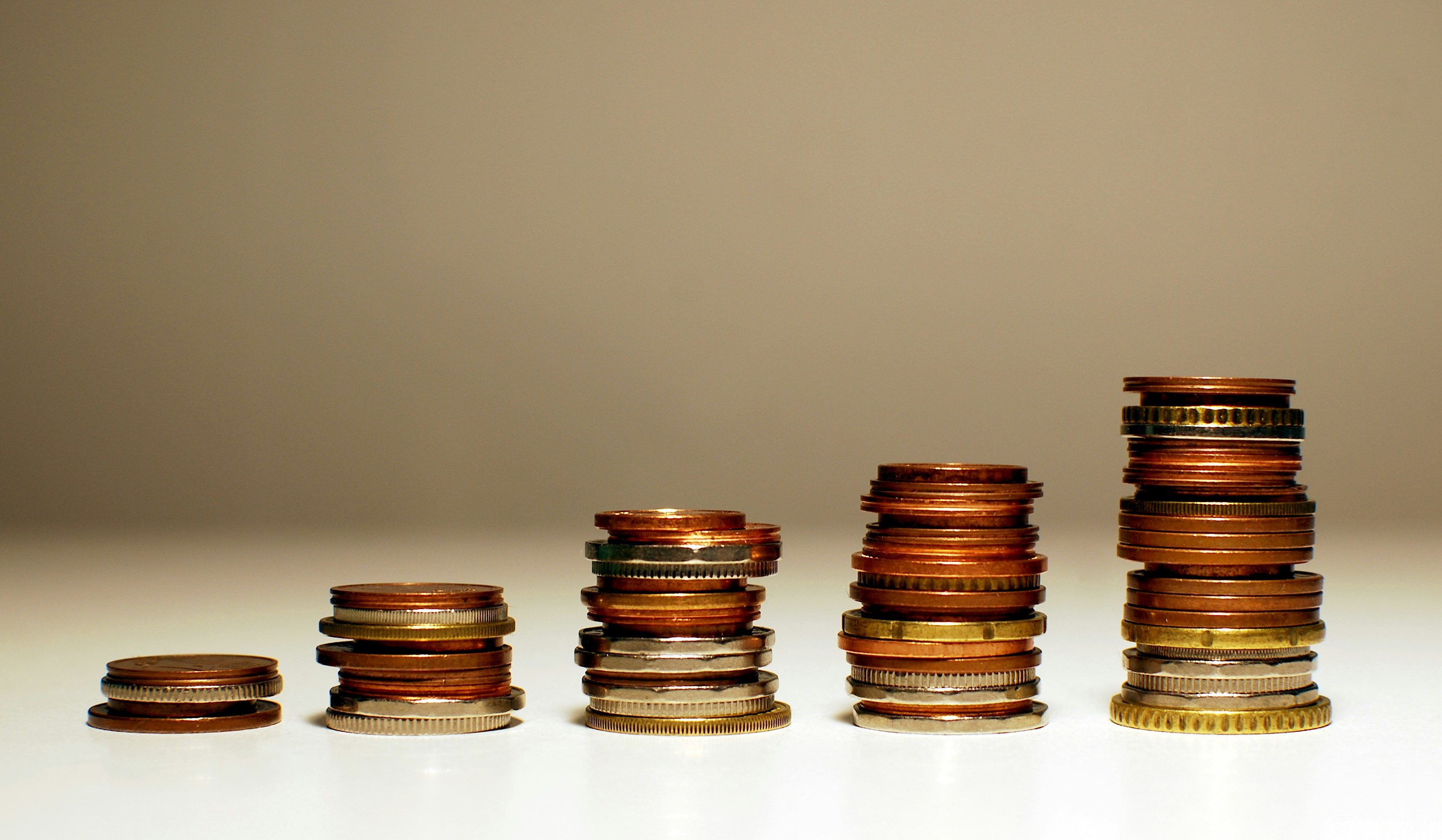
Continuous pricing requires continuous time. Latency cannot exist within it.
This is the point where capital stops being purely financial and becomes structurally dependent on culture. Cultural systems determine what is recognizable as value, while capital provides the medium through which that value is stored and transmitted. Legacy emerges only when these two forces stabilize each other across time: capital requires culture to be legible, and culture requires capital to persist beyond individual lifespans.
Wealth is no longer accumulation, but a structure that must be sustained as a living ecosystem.
This paradigm is articulated in the work of James E. Hughes Jr., where wealth is defined not as static capital, but as an intergenerational structure dependent on decision-making, value transmission, and systemic continuity. Similarly, James Grubman approaches wealth as a cultural system rather than a financial one. A family entering wealth does not merely experience a shift in net worth; it enters a new cultural framework in which values must be redefined to remain coherent.
At a deeper sociological level, Pierre Bourdieu suggests that value does not reside in objects themselves, but in the cultural frameworks that make them legible. Culture does not merely define value–it produces the temporal latency required for value to emerge. In this sense, capital becomes legacy only when it is stabilized by a shared cultural regime of time. Without this stabilization, capital remains liquid and fragmented; without capital, culture remains expressive but transient. Legacy is therefore not a continuation of wealth, but the point at which capital and culture converge into a persistent temporal structure.
In this context, alternative assets exist at the intersection of material reality and social structure, requiring continuous maintenance rather than passive ownership. In traditional European estate systems, assets are bound to geography, history, and generational continuity. A historic estate such as Château Lafite Rothschild derives value from terroir, reputation, and inheritance cycles, where each generation acts as custodian rather than owner.

Estate vineyards and generational assets structured by long-duration time horizons
By contrast, in Southeast Asia, family wealth is often anchored not in geography but in the continuity of operational systems across generations. CP Group exemplifies this model, where governance itself is inherited as a functional architecture rather than a static asset base. By shifting the focus from the preservation of physical assets to the continuity of operational logics, these Eastern structures redefine what it means to inhabit time. Capital is no longer viewed as a static monument to be guarded, but as a kinetic current that must flow through a resilient social fabric. Wealth, in this context, survives not because it resists change, but because its core governance system functions as a continuous temporal thread, absorbing external market shocks by anchor-weighting its logic in generational endurance rather than quarterly velocity.
Across forms, the principle remains consistent: an asset endures only when its temporal structure is deliberately designed and maintained. It does not exist independently of those who operate it, nor outside the time upon which it depends.
The Allocation of Time Over the Allocation of Capital
Elite portfolio architecture is not merely an exercise in optimizing returns, but a deliberate distribution of temporal systems. One segment remains highly liquid to respond to short-term shifts; another moves in sync with market cycles; a third is anchored in physical assets reflecting spatial and urban rhythms; and a final segment resides in alternative assets, where value unfolds through cultural and generational time. The logic is not proportional but stratified: each layer corresponds to a different form of time.
Gianni Agnelli embodied this fragmentation. Within the industrial sphere, he operated at the velocity of production and competition. Within art and culture, he entered a completely different temporal regime–one in which value was insulated from short-term economic fluctuation. Alternative assets function here as a mechanism of decoupling, allowing multiple temporal regimes to coexist within a single ownership structure.
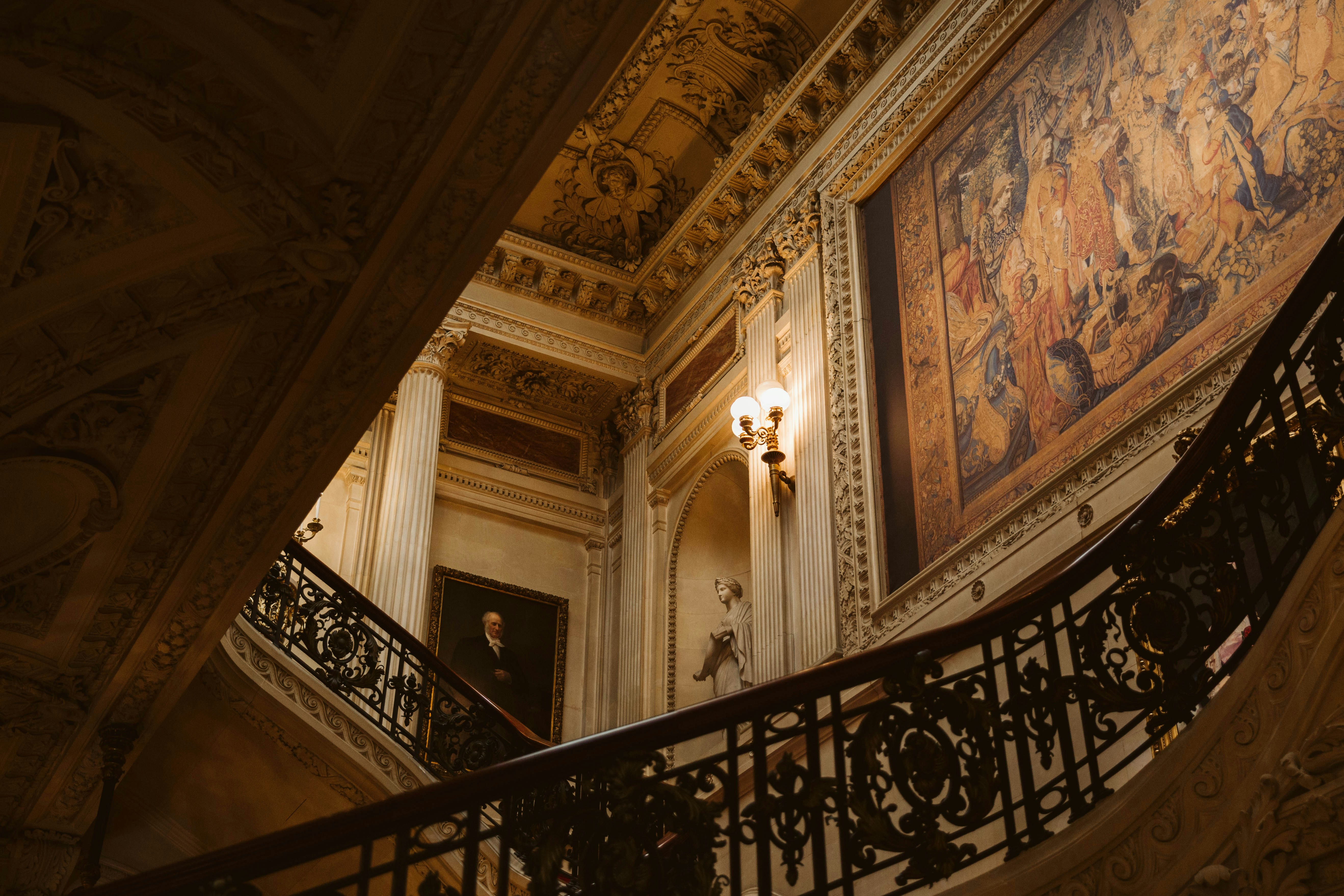
An asset persists only if its temporal structure is maintained.
Frozen Time and the Latency of Value
Traditional finance operates on velocity: immediate reaction, continuous repricing, and optimization through information flow. Alternative assets operate on latency, where value does not appear instantly but requires time for a stable cultural context to form around it. Illiquidity, often framed as risk, functions instead as a temporal filter. It removes short-term noise and protects the asset from forced responsiveness. Value emerges not from reaction, but from sustained contextual stability. Culture is not external to value; it is the condition of its possibility.
Salvator Mundi illustrates this clearly. Its material form remained unchanged, yet its valuation shifted dramatically as institutional validation, scholarly interpretation, and market narratives evolved. In Bourdieusian terms, this is the transformation of economic capital into symbolic capital. What changed was not the object, but the temporal duration required for society to recognize it. Legacy, in this light, is not the transfer of static property, but the transmission of a specific relationship with time.
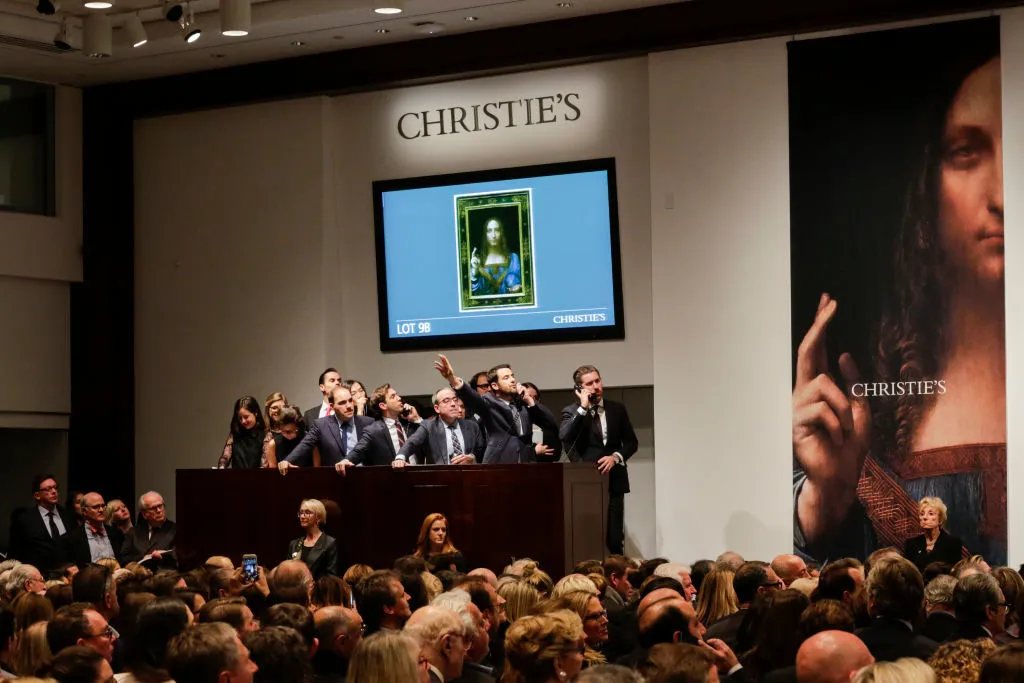
Salvator Mundi and the formation of value through time and symbolic capital
Value is not attached to the object. It accumulates around it.
The Wildenstein family exemplifies the collapse that occurs when that shared temporal framework dissolves. Assets remain, but the temporal coherence that once held them together disintegrates, leaving fragmented interpretations governed by market immediacy rather than inherited continuity.
In wealth transition – particularly at moments of generational rupture – language becomes a structure of time itself. When discourse avoids compressing lived experience into financial abstraction, time remains open. Under this logic, art represents the purest form of latency. Its value is not only aesthetic, but temporal: it holds creation, ownership, and reinterpretation simultaneously across different moments in time.
When Financialization Consumes Time
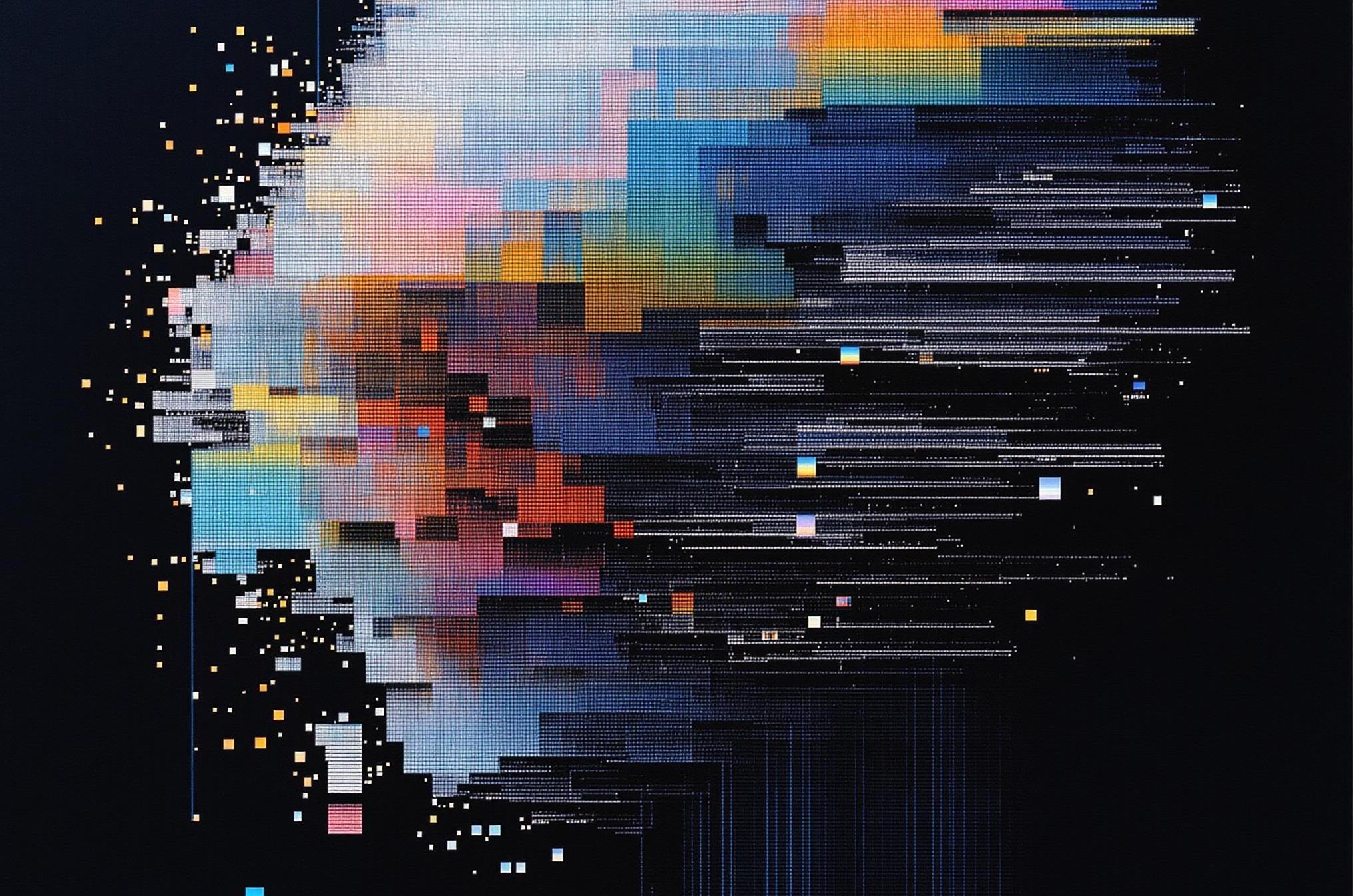
When financialization enters these systems, time shifts from latency to velocity, from continuity to fragmentation. Markets no longer remain external to alternative assets; they reorganize them from within–not by negating cultural meaning, but by altering temporal structure itself.
Platforms such as Masterworks illustrate this shift. Artworks are no longer treated as unified objects embedded in cultural memory, but as fractionalized financial instruments. The object remains intact, but its temporal experience is restructured. In traditional form, art accumulates meaning through slowness, layering memory and context over time. In financialized form, it adopts market rhythm: continuous pricing, liquidity preference, and ownership fragmentation.
In financialized form, it adopts market rhythm: continuous pricing, liquidity preference, and ownership fragmentation. This transition marks what can be called the colonization of time by the financial market. By slicing a singular canvas into tradable fractions, platforms do not merely democratize access; they systematically strip the artwork of its intrinsic temporal latency. The piece is abruptly evicted from its native regime of slow cultural accumulation and forced to perform under the high-velocity demands of the financial ticker. What is lost is not the material object, but its capacity to hold time open—replaced instead by a volatile framework where the density of time begins to erode, fracturing the very structure that makes meaning possible.
These systems do not fully exclude each other, but they no longer share the same temporal foundation. The issue is not efficiency or liquidity. When velocity enters a system built on latency, the density of time begins to erode. As that density thins, the asset persists physically, but its meaning-making structure fractures.
Three Temporal Logics Under One “Alternative” Label
Within the broader ecosystem of alternative assets, high-frequency trading systems (HFT), macro funds, and short-term derivatives operate on the inverse logic. They are designed to compress time itself, extracting value from volatility at extreme speed.
Within this structure, value is never accumulated over time; it is extracted through the compression of time itself.
Two opposing temporal regimes coexist under the same label, yet remain fundamentally incompatible. The central question is therefore not whether an asset is “alternative,” but which temporal system it inhabits. Assets designed for generational continuity lose their core logic when forced into immediate liquidity; market-driven assets lose coherence when placed within legacy frameworks.
Alternative assets are not a category of instruments. They are an intersection of finance, culture, and time. They cannot be understood through valuation alone, but through temporal architecture.
From a curatorial and advisory standpoint, this realization fundamentally reshapes how we approach collection building. True depth collecting is not an act of capital allocation; it is an act of temporal stewardship. The advisor's role shifts from assessing immediate market liquidity to evaluating an asset's structural resilience across time—asking whether a work has the capacity to hold stillness, to resist the flattening effect of immediate monetization, and to survive the inevitable ruptures of market cycles. We are not just collecting objects; we are preserving the temporal spaces they inhabit.
The final question is not whether value persists, but whether the temporal structure that produces value still survives.
When time compresses and memory no longer carries across generations, what remains stable enough for value to endure and still be recognized as meaningful?