Toward a Knowledge and Innovation Ecosystem in the Art World
Essay · 19 March 2026
The contemporary art world produces vast amounts of specialized knowledge. What it lacks is the infrastructure that allows it to circulate.
From the outside, the institutional landscape appears highly developed. Beneath this density lies a structural paradox.
The art world is institutionally dense but infrastructurally thin.
Serpentine Pavilion, Hyde Park, London. Where architecture, art, and public space intersect.
Knowledge generated across institutions remains largely confined within organizational boundaries. Research in museums rarely reaches independent artists. Market insight from auction houses seldom intersects with academic scholarship. Conservation expertise remains embedded within institutional archives.
The system is defined by friction in the circulation of knowledge.
The art world operates under conditions of asymmetry.Knowledge exists in depth, but not in circulation. Different actors hold highly specialized forms of expertise, yet the mechanisms that allow this knowledge to circulate across the broader cultural field remain limited.
What appears as a sophisticated cultural network often functions as a constellation of parallel systems.
Innovation Ecosystems and the Structural Gap
The contrast becomes clearer when examining how innovation develops in other sectors.
In innovation-driven sectors, ideas rarely develop within isolated institutions. They emerge through continuous interaction between research, experimentation, and capital.
The art world historically evolved through a different institutional logic.
It developed a dense network of institutions, each contributing to the production of cultural knowledge. Yet without connective infrastructure, this knowledge remains dispersed.
Museums preserve and interpret. Galleries construct trajectories. Auction houses translate value into price. Universities formalize knowledge.
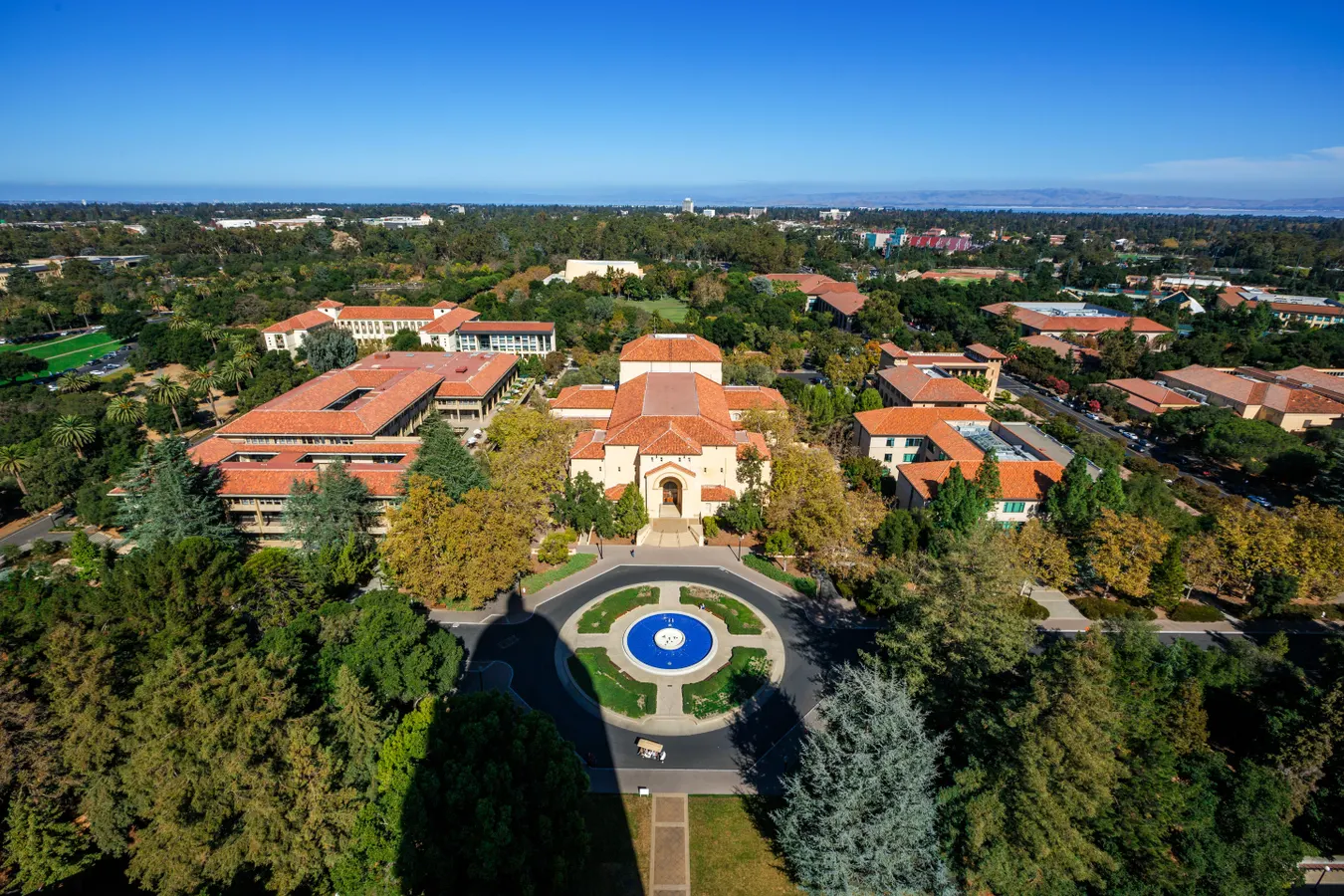
Stanford University, California — part of the broader Silicon Valley innovation ecosystem where research, entrepreneurship, and capital interact.
Each institution performs a distinct role within the cultural field. Yet these roles rarely function as parts of a coordinated system.
Artistic innovation often emerges through indirect encounters rather than structured collaboration. Artists meet curators through exhibitions, scholars through publications, collectors through galleries, and markets through auctions.
These interactions shape trajectories, yet the infrastructures linking them remain largely informal.
The art world possesses institutions. What it lacks is the connective infrastructure that allows them to function as an ecosystem.
Emerging Experiments
Despite these limitations, several initiatives suggest what a more connected cultural infrastructure might look like.
The Serpentine Galleries in London established an R&D platform exploring intersections between art, science, and technology. Through collaborations with researchers and technologists, the institution extends its role beyond exhibition-making toward interdisciplinary knowledge production.
Similarly, NEW INC, founded by the New Museum, introduces incubation structures from the startup ecosystem into cultural practice. The program provides mentorship, collaborative environments, and professional networks for artists, designers, and cultural entrepreneurs.
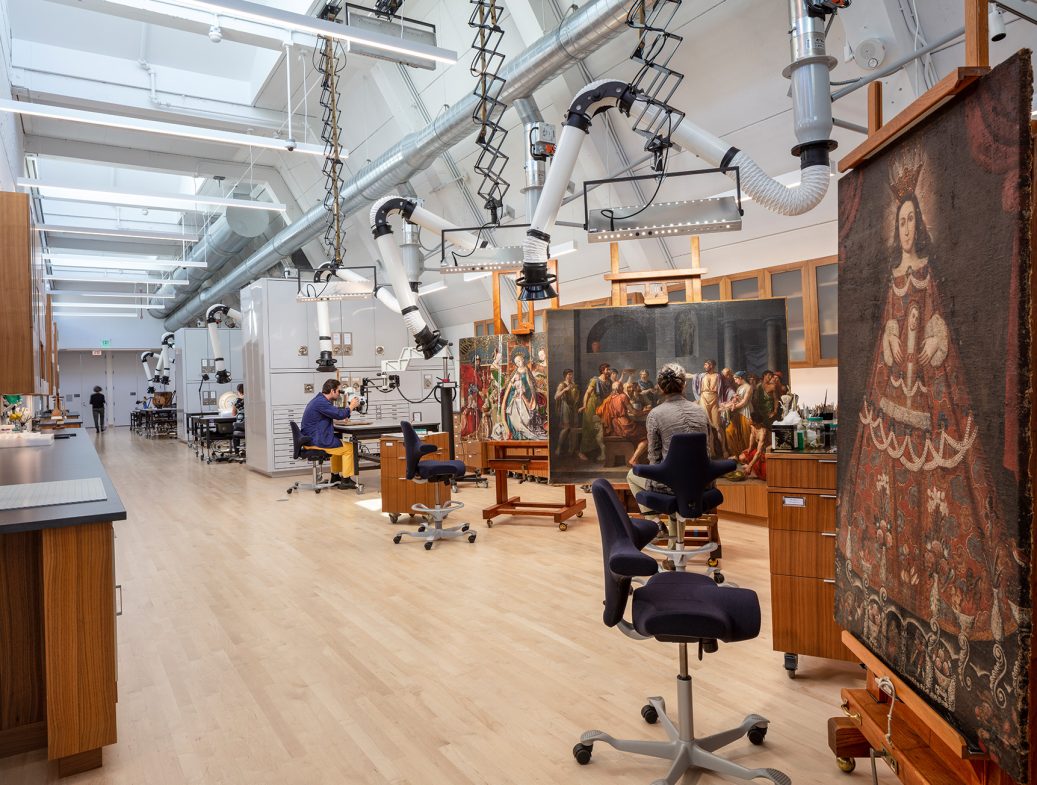
Other institutions experiment with open knowledge infrastructures.The Getty Conservation Institute develops open-access research initiatives that allow conservation knowledge to circulate across museums and laboratories.
Conservation laboratory inside a major museum, where scientific research and art preservation intersect.
Platforms such as Art Basel increasingly operate not only as marketplaces, but as informational environments.
These initiatives introduce fragments of infrastructure into an otherwise disconnected field. Yet they remain partial experiments rather than systemic structures.
Many components of an innovation ecosystem already exist within the art world. What remains absent is the connective architecture linking them.
Designing Cultural Infrastructure
The challenge is not to build more institutions. It is to design the structures that allow existing ones to interact.
Such infrastructure operates across both digital and physical layers.
Digital platforms aggregate research archives, conservation data, provenance records, and market information into shared knowledge networks.
Emerging technologies extend the conditions for transparency and continuity.
Yet the challenge is not simply connectivity. It is interoperability.
For cultural knowledge to circulate effectively, information produced by museums, archives, research institutions, and market platforms must be legible across institutional systems. Metadata standards, open research initiatives, and shared digital infrastructures form the basis of such interoperability.
Physical environments enable exchange. Spaces where artists, curators, scholars, technologists, and collectors encounter one another often become sites where new ideas emerge.
Within such environments, knowledge moves between research, experimentation, and cultural production.
The goal is not to centralize the art world. It is to enable its existing institutions to interact.
The structure of such an ecosystem can be read as a layered system of interaction.
Knowledge does not move linearly. It circulates across domains, between research, practice, and market, through infrastructures that keep them separate yet connected.
A cultural knowledge infrastructure model, linking knowledge, practice, and market across shared layers.
Where the system is encountered
The infrastructure is not experienced as a system in its totality. It is encountered through use.
A curator enters through a research interface. She searches across exhibition histories, conservation records, and market data.
What appears as a single query draws from multiple knowledge systems.
From this point, interaction extends beyond access.
She traces connections between artists, materials, and prior exhibitions. She identifies gaps in existing discourse. She reaches out to a conservation specialist within the same network. A conversation begins.
The digital layer does not replace institutions. It renders their knowledge legible across contexts.
In parallel, physical environments operate as sites of exchange.
Residencies, research labs, and small-scale convenings bring together artists, curators, technologists, and researchers. Encounters that would otherwise occur by chance become structured without becoming fixed.
Ideas move between research, conversation, and experimentation.
Over time, the value of such infrastructure is not defined by the volume of information it contains.
It is defined by what becomes possible through connection.
A curator develops an exhibition grounded in materials previously inaccessible. An artist encounters a method that alters the direction of their work. A collector gains a deeper understanding of the conditions surrounding an artwork.
The infrastructure does not produce knowledge. It enables its circulation.
Its economic logic emerges through layered participation. Institutions contribute to and access shared infrastructures. Market actors engage through data, insight, and proximity to emerging knowledge. Public funding sustains the conditions under which such circulation remains possible.
The system remains distributed.
What changes is not the existence of knowledge, but the conditions under which it becomes visible, transferable, and actionable.
Between institutions and infrastructure, a new category of cultural actors emerges.
Art-tech startups, research platforms, and cultural consultants do not sit within the system. They operate across its boundaries.
They translate between artistic practice, institutional knowledge, and technological systems, linking domains that historically evolve in isolation.
In many cases, innovation within the cultural sector depends less on the creation of new institutions than on the presence of these connective roles.
By operating across boundaries, intermediaries enable knowledge to circulate across the ecosystem.
They function less as gatekeepers than as bridges.
Scale and the Ecology of Artistic Innovation
Innovation ecosystems in the business world are often associated with large technology clusters and corporate research environments. Scale is frequently treated as a primary driver of innovation.
The cultural sector operates through a more complex ecology.
Parisian salon, eighteenth century. Early spaces of intellectual exchange.
While major institutions provide resources, visibility, and historical continuity, many forms of artistic experimentation emerge within smaller environments. Independent project spaces, salons, and interdisciplinary venues often function as micro-scale experimental nodes where new ideas first appear.
Within such spaces, slower forms of dialogue unfold between artists, writers, researchers, and audiences. These encounters generate forms of exchange that are difficult to reproduce within large institutional structures.
Rather than competing with major institutions, such environments operate as experimental layers within the broader cultural ecosystem.
Cultural innovation depends not only on institutional scale, but on the coexistence of multiple spatial and organizational layers.
Toward a Connected Cultural Infrastructure
Much of the intellectual infrastructure already exists.
The challenge is not creating new institutions. It is enabling existing ones to connect.
Digital systems aggregate knowledge. Physical environments enable exchange.
Together, they allow knowledge to circulate.
The art world has long developed through institutions. Yet without connection, knowledge remains dispersed.
Cultural ecosystems do not emerge from institutions alone. They emerge from the conditions that allow knowledge to move between them.
— Dao Nguyen Anh
Image Credits
Serpentine Pavilion, Hyde Park, London Image credit: Serpentine Galleries.
Stanford University campus, California Image credit: Stanford University.
Conservation laboratory, Museum of Fine Arts, Boston Image credit: Museum of Fine Arts, Boston.
An Evening with Madame Geoffrin, c. 1812 Artist: Anicet Charles Gabriel Lemonnier. Image credit: Public Domain / Musée National du Château de Versailles.

.png)
